


Your sleep posture is making your pain worse.
This is according to a renowned spine specialist who claims to have found a “simple solution for neck and back pain.”
Dr. Hiroshi Tanaka was booked three months in advance with patients who were suffering from debilitating pain.
The doctor helped in any way he could. But he noticed a pattern among his patients.
Their Worst Back And Neck Pain Was In The Morning
Patient after patient described waking up with:
- Neck so stiff they could barely turn their head
- Shoulder pain that wouldn't go away
- Back pain that kept getting worse
- Shooting pain between their shoulder blades
- Numbness and tingling in their arms
- Headaches that started at the base of their skull
As a doctor, he knew this was backward. Sleep should heal, not hurt.
Something was happening that was either contributing to their pain or preventing their bodies from healing properly.
That’s when he became obsessed with studying...
How Sleep Is Connected To Back And Neck Pain
Through thermal imaging and advanced muscle monitoring equipment, he studied the sleep process of 1,000 people with pain.
Dr. Tanaka discovered that most sleep positions force your trapezius muscle—the crucial connector between your neck and shoulders—to stay tense all night.
“Your muscles desperately try to keep your head and neck aligned, hour after hour, night after night,” he explained.
This creates a devastating chain reaction:

First, your neck muscles lock up because they're forced to work overtime. These muscles tense up trying to hold your head in the right position. It's like asking them to do a plank exercise all night—they eventually seize up from exhaustion. 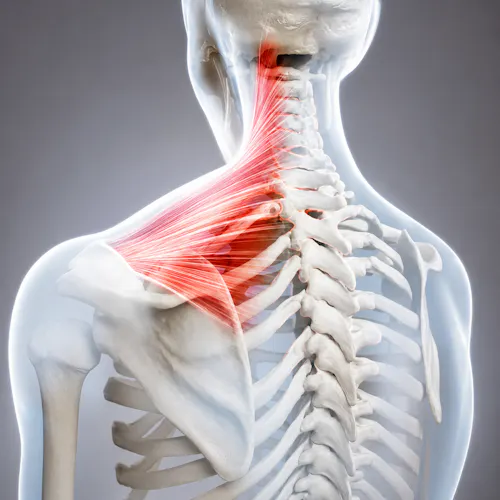
Then tension spreads to your shoulders because they're all connected. When your neck muscles lock up, nearby shoulder muscles tighten to help support the weight of your head. It's like a row of dominoes—once one muscle group gets strained, the next one takes on extra work until it also becomes overwhelmed. 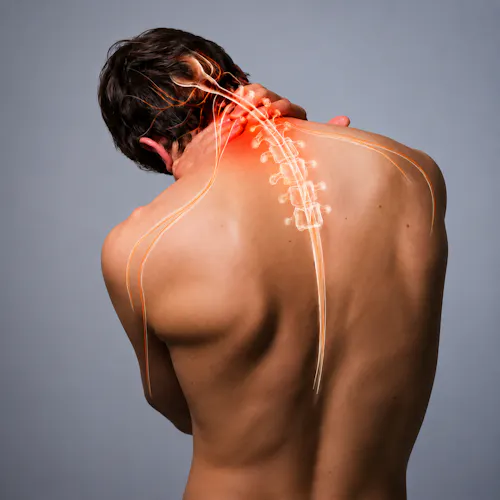
Finally, the combination of locked neck muscles and tense shoulders pulls your spine out of its natural position. When your spine is misaligned, it compresses delicate nerves, causing pain to radiate throughout your body.
“Your bed isn't the problem,” Dr. Tanaka said.
You can have the most expensive mattress in the world, but if your pillow doesn't support proper alignment, you're damaging your body every night.
This leads to problems like stiff, painful necks, shoulder pain, upper and lower back pain, and numb arms.
This led Dr. Tanaka to ask a simple question:
“What If You Could Heal Your Back And Neck Pain While You Sleep?”
“If bad sleep posture makes pain worse, then good sleep posture can fix it. So the answer seemed simple,” he said. “Design a pillow that supports perfect posture while you sleep.”
Working with biomechanical engineers, Dr. Tanaka mapped out exactly how the neck and spine should be positioned during sleep. Using pressure sensors and anatomical modeling, his team identified the precise curves and support points needed for optimal alignment.
The end result was the Ergo Pillow.
“The shape looks unusual,” Dr. Tanaka admits, “but that's because it's designed to work with your body's natural structure.”
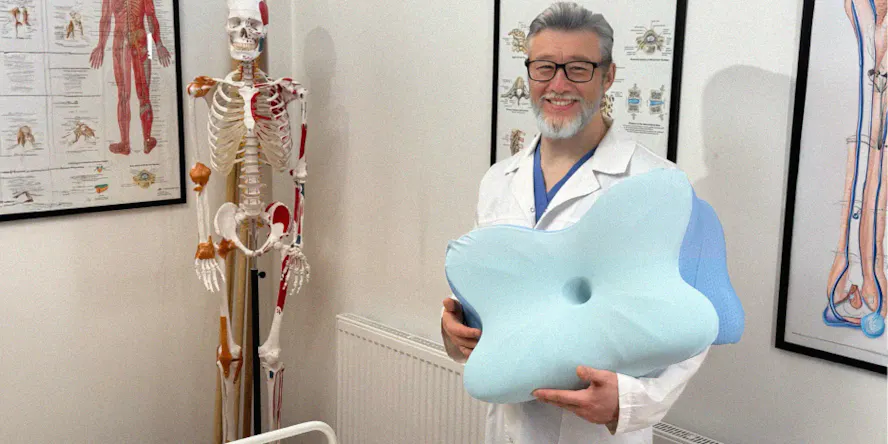
Regular pillows force your muscles to compensate because they lack neck cradle support, shoulder zone support, and back-of-head support.
The Ergo Pillow was designed to support all three of these. Which means your muscles can finally relax and heal.
Perfect Support In Any Position

Back sleepers get precise neck support that keeps their spine perfectly aligned. The gentle curve cradles your head while supporting your neck at the exact right height. 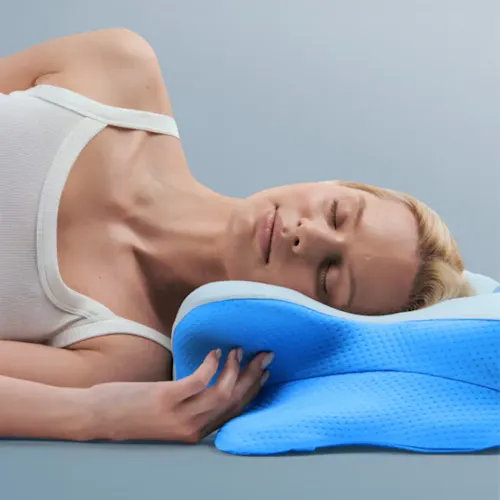
Side sleepers often struggle with regular pillows being either too high or too low. The Ergo Pillow’s unique side zones are designed to fill the exact space between your shoulder and head, maintaining perfect alignment. 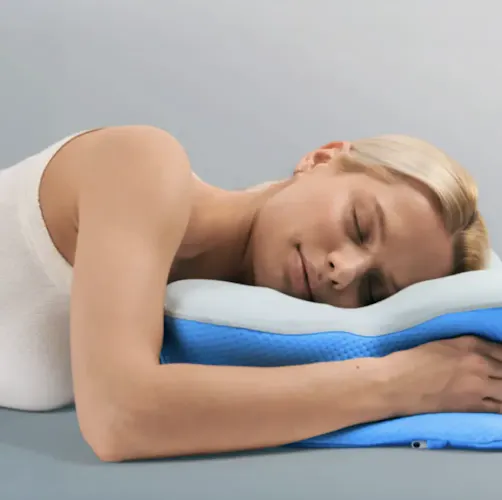
Even stomach sleepers find comfort because the pillow's graduated support prevents neck twisting.
The Science Behind The Ergo Pillow’s Shape
According to Dr. Tanaka, each curve and contour serves a purpose:
“Each feature was developed through careful research,” Dr. Tanaka explains.
“The central valley supports your head at precisely the right height. The raised neck support maintains your spine's natural curve. The shoulder cut-outs give your muscles room to relax. And the side zones ensure perfect alignment even when you turn.”
But Does The Ergo Pillow Really Solve Back And Neck Pain? I Put It To The Test
As a health journalist who's covered countless "miracle" products, I was naturally skeptical.
But also as someone who has had neck pain for years, I was willing to try anything. Especially something from a renowned doctor.
So when I heard about Dr. Tanaka's claims, I decided to investigate personally. I ordered a Ergo Pillow and here is my experience:

Day 1: The shape definitely feels different from my regular pillow. Took me longer to fall asleep, but I noticed I wasn't constantly readjusting to get comfortable.
Day 2: Slept better but woke up with some soreness. Dr. Tanaka mentions this is normal as your body adjusts to proper alignment.
Day 3: The soreness is gone. I notice my shoulders feel less tense in the morning. Usually by lunch my neck would be stiff, but today it feels looser.
Day 5: Starting to notice real changes. My typical morning shoulder blade tension is significantly reduced. Haven't had to massage my neck at work like I usually do.
Day 7: After a week, the difference is very noticeable. I'm waking up with about 50% less neck stiffness. My range of motion has improved noticeably, especially when checking blind spots while driving.
Conclusion—Should You Try The Ergo Pillow?
I have to admit it. These seven days changed my perspective on neck and back pain. What started as hopeful curiosity ended with me being almost pain free. I’m looking forward to seeing what other improvements I get over the next month.
And as someone who tests health products for a living, most of the products I review don’t live up to my expectations. The Ergo Pillow is different—it's now permanently on my bed.

Comments